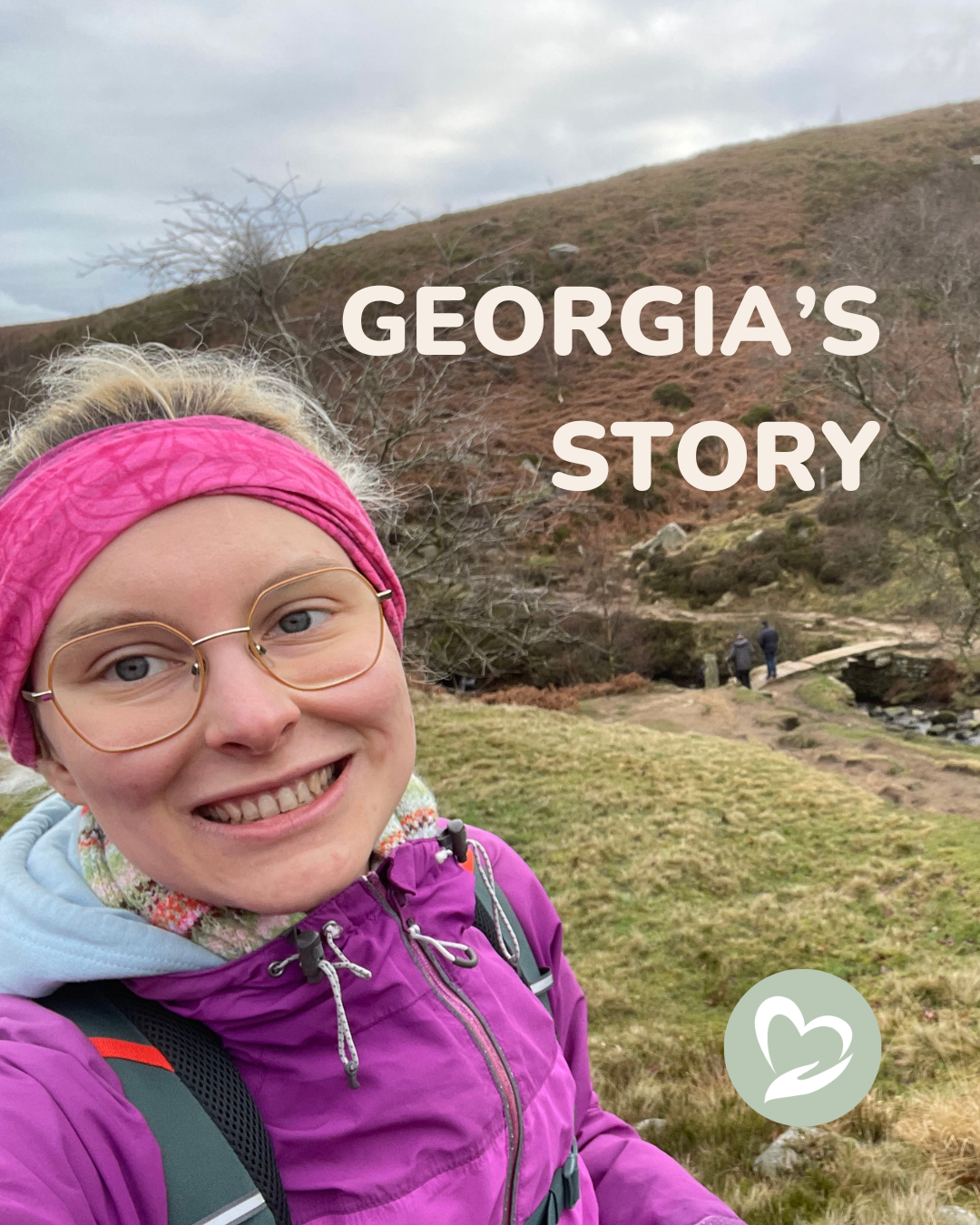
Exercise is good for you, right? We’ve all had it drilled in to us from a young age that regular exercise, along with eating healthily, are the foundations of good health. And even if you don’t get drawn in by the fad Internet trends and magazine articles, there’s a general perception that the more exercise, the better. And what’s more, it leaves you feeling good, accomplished and refreshed.
But it’s a fine line between enjoying exercise for the right reasons, and finding yourself a slave to compulsions. It’s one I have trodden on the wrong side of one too many times, and an illness I don’t feel there is enough awareness around.
If you’re struggling with your relationship with food and exercise, know someone who is, or want to educate yourself more on this condition, I hope this article can help you.
My Journey with Disordered Exercise
I’ve loved sport since I was little. I grew up swimming competitively, but my love for moving my body went much deeper than the enjoyment I got from structured training. I loved running round the school field at playtime, going on long walks in the summer, and trying all the niche outdoor activities there are out there.
In my late teens, I developed anorexia. For me, I don’t think the main ‘goal’ was around being thin, but more so feeling in control and feeling accomplished. At a time in my life when things were beginning to feel a bit overwhelming (studying for A-Levels, looking to start university), controlling what I ate felt like a safety blanket. I had also reduced the amount of sport I did during this time to focus on studying, and reducing my calorie intake seemed to satisfy my competitiveness, and well as giving me some of the same ‘this makes me feel healthy’ benefits I was used to getting from sport.
Obviously, anorexia did none of those things. It made me mentally and physically exhausted. I sought help from SYEDA as well as outpatient hospital care. After a few months, I was eating more and my weight improved to the ‘healthy’ range. I was discharged from the hospital, and went back to doing the sport I loved. Everything was sorted.
In many ways, this was when the problem started.
To an outsider, I looked to be eating well. But I was also exercising a lot. I started triathlon at university, and although I genuinely loved it, I quickly developed a compulsion to train, and my relationship with food and exercise became messily intertwined. I trained at a high level at university, and unfortunately my situation wasn’t uncommon. Studies have suggested up to 45% of female and 19% of male athletes of mixed abilities struggle with disordered eating [1] and numbers could well be higher, particularly with males where physical symptoms can be harder to spot, and where sadly there often is more of a stigma. Endurance sports such as running, cycling and triathlon where there is a misconception that lighter = faster, and aesthetic sports such as dancing have the highest levels.
It took me many years to get to a better place with my relationship with food and exercise. Initially, breaking from my routine, reducing my exercise and eating more / different food filled me with immense guilt and a lack of control. But over time, I started to see how much better I felt in myself, and how many new experiences this was allowing me to enjoy.
I felt keeping such rigidity around my food and exercise was giving me control and a sense of achievement, but once I started to break the cycle, I could see this was not the case. The freedom I felt in being able to eat what I wanted irrespective of how much exercise I had done topped any emotion anorexia had ever given me. The happiness and contentment I began to feel with my life in general was greater than I could’ve possibly imaged.
RED-s – Have You Heard of it?
RED-s stands for Relative Energy Deficiency in Sport. It was previously called the ‘Female Athlete Triad’, commonly diagnosed by low energy availability, low bone density, and missing periods, caused by using more energy to exercise than is being eaten. This term was replaced by RED-s as the condition is not specific to females. Males can suffer from RED-s too. There are two types – intentional, and unintentional.
For physically active people (and this can mean anything from going to the gym every now and again to being an elite athlete) who also struggle with disordered eating, intentional RED-s is the term used. This may include people who are using exercise to control their weight, who feel compelled to exercise as a means of control (similar to how they may control their food intake), or who seek to loose / control their weight for apparent performance or aesthetic gains. I struggled with intentional RED-s for several years as used exercise as my currency for ‘allowing’ myself to eat and as a crutch for my self-worth.
My mental outlook with food and exercise then began to improve. A large part of this was, I think, a complete change in scene and lifestyle, and finding enjoyment in other activities and the company of other people. I learnt more about RED-s, and became more aware of what it was taking away from me. My energy for day-to-day life, my chances of having children in the future, my bone strength (I was diagnosed with osteopenia on a DEXA scan), my GI function, my longevity and injury-resilience in sport (which I now felt able to enjoy for the right reasons, without the compulsive and dependant behaviours).
I was then struggling with unintentional RED-s. I was no longer purposely restricting my food intake, I wasn’t exercising compulsively, and I felt mentally at peace with how I felt around food and exercise. But my body was not at the same point. I still had no menstrual cycle, had very low hormone levels, and struggled with other symptoms such as poor GI health, hair loss and frequent injury.
Recovering from any form of RED-s is extremely difficult. There is no set blueprint and everyone’s recovery needs are different. Generally, it’s a mixture of increasing calorie intake, reducing exercise and reducing general stress. It can feel frustrating, disheartening and never-ending, you can find yourself thinking ‘why am I still struggling’ on repeat, but you can get there.
My 9 Top Tips for Someone Recovering from Disordered Eating and Exercise
1. You need to break the cycle. I know this feels so uncomfortable, but while you still cling on to your disordered behaviours around food and exercise, your health isn’t going to improve. It gets easier. After a few times challenging a disordered behaviour, the guilt lessens, and you start to feel proud of yourself and see your progress for what it really is – progress towards a happier, healthier you.
2. Focus on you. I think there are two sides to this. One – ignore all the misinformation out there. A lot of what we see on social media, screens or in magazines isn’t fully true, is a very brief snapshot in time, or is coming from someone who themselves may not be healthy. Even in outlets we may think of as ‘more reputable’ such as sports magazines, I see time and time again articles including training routines which an athlete may only hit for a couple of weeks a year in lead up to a race, or feature images which show an athlete with a (often edited) build that they do not have all year round. And two – don’t compare yourself to others. I probably found this harder than point one. I found myself constantly judging myself for how much more I was eating than others around me, or for how my body was different. But we all have different metabolic needs and natural, healthy body types. It’s really difficult, but try your best to focus on you.
3. Celebrate progress. Recovery can be a long old road, and undoubtedly there will be bumps along the way. Don’t expect everything to get sorted – physically or mentally – overnight. Acknowledging you want to change is a massive first step, so first of all take pride in this! Give yourself credit for every behaviour you challenge and every symptom you feel improving, and be kind to yourself if sometimes things don’t go to plan. You will get back on track. And sometimes it’s easy to forget just how far you’ve come.
4. Food is fuel. It can take a pretty big mind shift to start seeing food as something that allows you to do things you love, instead of seeing it as something that has to be earned. In relation to exercise, it’s really important to develop a mentality of ‘this food allows me to exercise which I enjoy’, rather than ‘I have to exercise to eat.’
5. Redefine a ‘healthy lifestyle’ on your terms. Even away from some of the more extreme internet diets and routines, there’s a widely accepted view of a ‘healthy lifestyle’ – lots of fruit and veg, regular exercise, little processed food. Especially during recovery, but also as a physically active person, it’s important to recognise your needs will be different. I find I need to eat a lot more times a day than most people, and carbs, fats and protein make up more of my plate than fruit and veg. I’ll eat when I’m hungry (something which can be quite hard to recognise initially) even if this is between planned mealtimes. I found this crucial in my recovery to avoid mini ‘starvation phases’ throughout the day, despite snacking getting a bit of a bad press generally (most nutritionists advise 3 meals and 3 snacks a day for a normal healthy person – you may need more if you’re recovering, or if you’re physically active!). Making sure you’re not excluding any food group – fats, proteins and carbs – is key, and potentially decreasing fibre and prioritising more energy dense foods such as adding oil dressings, nut butters etc can really help your body reach a place where it feels safe.
6. Cherish other things. For many of us, exercise may be part of our routine, something we have enjoyed since a young age, or a big part of our social lives. Even without the disordered element, it can feel uncomfortable to change our exercise habits. But this is crucial in order to recover and get true, untainted joy from exercise. Replace exercise with other things that bring you joy. For me, this involved art, reading, and writing … something which has led to me being able to write posts like this one! Learn the language, play the instrument, stroke your pet. There are so many things to enjoy in life and they’re out there for you to embrace.
7. When you’re physically healthy, mental recovery becomes easier. When our bodies are in a starvation state, our moods are lower and our thinking more rigid. This makes challenging disordered thoughts even more difficult. I was honestly shocked my how much clearer I felt able to think once I began eating more. It was as if I was beginning to see the world in colour again, and it became easier to expel my disordered thoughts.
8. BMI is not a good gauge of health. Especially not for physically active people. Firstly, an eating disorder or disordered exercise habits are not reliant upon your weight. You do not need to be underweight to have an eating disorder. It’s about your mental attitude towards food (and exercise). But secondly, physically, you can be in a state of energy deficiency despite having a ‘healthy’ BMI. This is especially common in athletes (of all abilities) who may have greater muscle mass than the average person, but is something for everyone to note. Our bodies all have their own natural ‘set-points’ and metabolic needs, which simply cannot be summarised by a generic BMI chart or nutritional guidelines. I found my natural set point and nutritional needs are much higher than guidelines would assume. (Note – I really advise against monitoring weight and food intake, but just wanted to include this as an example that we’re all unique!)
9. Being recovered will feel better than you can imagine. Recovery can feel incredibly hard. Initially, once I started eating more, I felt extremely hungry, and worried I would eat and gain weight indefinitely. Your body adapts, and after a while, you naturally begin to align again. I couldn’t believe how many symptoms I had come to accept improved when my relationship with food and exercised got better – GI issues, hair loss, low mood. When you’ve been struggling with disordered eating and exercise, it can be difficult to imagine ever finding enjoyment in simple things again. Going for a walk and icecream, without thinking about counting steps, or tracking the calories in the icecream. But as you recover, you find it easier and easier to find untainted pleasure in these things, and that propels you forward with even more motivation. You begin to see again how beautiful life can be.
You Can Recover.
I began struggling with disordered eating and exercise eight years ago. Only in the past year would I say I have begun to feel ‘fully recovered’, physically and mentally. That isn’t to say I never struggle, but I feel able to squish disordered thoughts before they really bother me.
I enjoy the sport I do, and through every step of my recovery, have got more and more pleasure from it. I’m a competitive triathlete, and have won World and National Age Group medals – something I would have never been able to do had I not made progress with my disordered eating and exercise. Although I train often, I don’t feel the dependency on exercise that I once did, and I feel able to enjoy my food regardless. It’s a place I never thought I’d be able to get to, but a freedom I am thankful for every day.
By reading this (rather long!) article, you’ve shown you want to improve your relationship with food and exercise. That’s an incredible first step! You can recover and become a happier, healthier version of yourself.
Reference List:
[1] Eating disorders in athletes: overview of prevalence, risk factors and recommendations for prevention and treatment - PubMed